
 info@trade-jp.net


 menu

News / Blog
ATTENTION! September Holidays!
Catalog


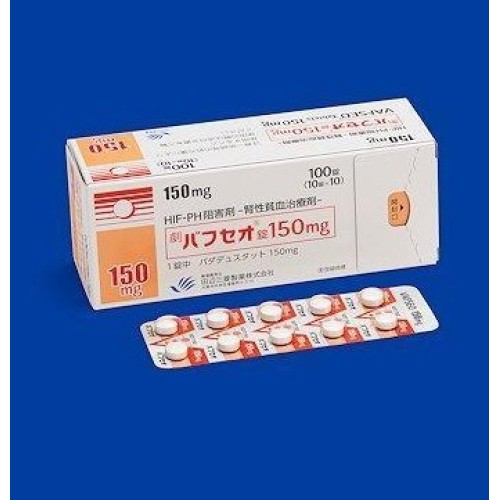
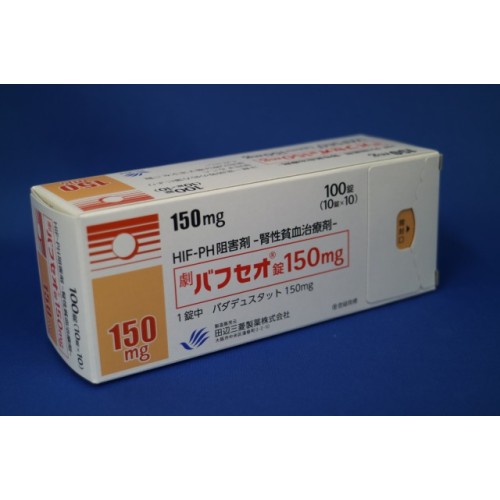
Vafseo Tablets 150 mg for renal anemia (vadadustat, HIF-PH inhibitor)
Product Code :
Availability : 8
USD 590.00
Are Vafseo Tablets 150 mg effective for renal anemia (HIF-PH inhibitor)?
What are Vafseo Tablets 150 mg?
Vafseo Tablets 150 mg are a prescription medicine for renal anemia, the anemia that develops with chronic kidney disease. Each white, round film-coated tablet contains 150 mg of vadadustat. Vadadustat belongs to the class of HIF-PH inhibitors. It was approved in Japan in 2020 and is used in three groups of patients:
- patients with chronic kidney disease who are not yet on dialysis
- patients on peritoneal dialysis
- patients on hemodialysis
What is renal anemia?
The kidneys produce erythropoietin, the hormone that tells bone marrow to make red blood cells. When kidney function declines, less erythropoietin is made. Fewer red blood cells mean lower hemoglobin and less oxygen carried to the tissues. This often shows up as tiredness, breathlessness on exertion and pale skin. For people not previously treated with erythropoiesis-stimulating agents (ESAs), treatment is considered when hemoglobin falls below 11 g/dL in patients not on dialysis or on peritoneal dialysis, and below 10 g/dL in hemodialysis patients.
How does vadadustat work?
The body senses oxygen through a protein called hypoxia-inducible factor (HIF). When oxygen is plentiful, enzymes called prolyl hydroxylases (PHD) tag HIF-α for destruction. When oxygen is low, this tagging slows, HIF-α builds up, and genes that raise red blood cell production switch on, including the gene for erythropoietin.
Vadadustat blocks PHD1, PHD2 and PHD3. HIF-α is then stabilized, the body produces more of its own erythropoietin, and hemoglobin and red blood cells increase. Treatment works through this natural pathway and does not supply erythropoietin from outside. Blood levels peak about 1 to 2 hours after a dose. The half-life is about 6 hours, and a steady state is reached within 3 days of daily dosing.
What clinical studies show
For patients not on dialysis, the main trial is reported in Nangaku et al., “Phase 3 Randomized Study Comparing Vadadustat with Darbepoetin Alfa for Anemia in Japanese Patients with Nondialysis-Dependent CKD,” Journal of the American Society of Nephrology, 2021. It randomized 304 patients to vadadustat or darbepoetin alfa for 52 weeks, aiming for a hemoglobin of 11 to 13 g/dL. Average hemoglobin at weeks 20 and 24 rose from 10.44 to 11.66 g/dL with vadadustat, against 11.93 g/dL with darbepoetin alfa. Vadadustat met the criterion for non-inferiority. Among patients who had not used an ESA before, 71.8% of those on vadadustat had an average hemoglobin within the target range at weeks 48 and 52.
For hemodialysis, the main trial is reported in Nangaku et al., “Efficacy and safety of vadadustat compared with darbepoetin alfa in Japanese anemic patients on hemodialysis: a Phase 3, multicenter, randomized, double-blind study,” Nephrology Dialysis Transplantation, 2021. In 323 patients switched from an ESA, average hemoglobin at weeks 20 and 24 was 10.61 g/dL with vadadustat and 10.65 g/dL with darbepoetin alfa (difference −0.05 g/dL, 95% confidence interval −0.26 to 0.17), within a target range of 10 to 12 g/dL. Vadadustat was non-inferior, and the authors concluded it can be an alternative to ESA treatment in these patients.
For peritoneal dialysis, the study is reported in Nangaku et al., “Vadadustat for anemia in chronic kidney disease patients on peritoneal dialysis: A phase 3 open-label study in Japan,” Therapeutic Apheresis and Dialysis, 2021. In 42 patients treated for 24 weeks, average hemoglobin rose from 10.89 to 11.35 g/dL, within the target range of 11 to 13 g/dL. 64.3% of patients (27 of 42) stayed within the range at weeks 20 and 24.
Package details: 100 tablets
Active components: vadadustat 150 mg per tablet
Therapeutic effect: Inhibits the prolyl hydroxylase enzymes PHD1, PHD2 and PHD3, stabilizes HIF-α and raises the body’s own erythropoietin production, which increases hemoglobin and red blood cells in renal anemia. In clinical studies, hemoglobin reached the target range in patients not on dialysis, on peritoneal dialysis and on hemodialysis.
Dosage and administration: The usual adult starting dose is 300 mg (two 150 mg tablets) once daily. The dose is then adjusted according to hemoglobin, up to a maximum of 600 mg once daily. Increases are made in steps of 150 mg, at intervals of at least 4 weeks. After a treatment interruption, restart at one dose step lower. Hemoglobin is checked about every 2 weeks after starting until it is stable in the target range, and about every 4 weeks afterwards. If hemoglobin rises by more than 2.0 g/dL within 4 weeks, the dose is reduced or paused promptly. When switching from an ESA in hemodialysis, hemoglobin tends to fall, so it is watched closely. Iron is needed for blood formation, and iron supplements are given in iron deficiency. The dosage can be adjusted by your doctor.
Contraindications and precautions: Do not use if you have had a hypersensitivity reaction to any ingredient. Thromboembolism, including cerebral infarction, myocardial infarction and pulmonary embolism, can occur during treatment. Your doctor assesses this risk before treatment, especially if you have had a stroke, heart attack or pulmonary embolism.
Liver dysfunction can occur, so liver tests are done regularly. Blood pressure may rise. Tell your doctor if you have high blood pressure, cancer (the medicine promotes blood vessel growth and could worsen it) or eye disease such as proliferative diabetic retinopathy, macular edema, exudative macular degeneration or retinal vein occlusion.
Calcium, iron, magnesium and aluminum preparations, including iron-containing phosphate binders, reduce absorption. Take vadadustat at least 2 hours before or after them. Probenecid raises vadadustat levels, and a lower dose may be needed. Vadadustat raises levels of rosuvastatin, simvastatin, atorvastatin, sulfasalazine, furosemide and methotrexate, so your doctor will observe you more closely when they are combined. Use in pregnancy only if the benefit outweighs the risk. Breastfeeding is best avoided, as vadadustat passed into milk in animals. No clinical trials have been done in children. An overdose can raise hemoglobin too much, and vadadustat is not removed by dialysis.


