
 info@trade-jp.net


 menu

News / Blog
ATTENTION! September Holidays!
Catalog


| Product Code | |
| Availability | 4 |
| Price | USD 3,490.00 |
| Qty |
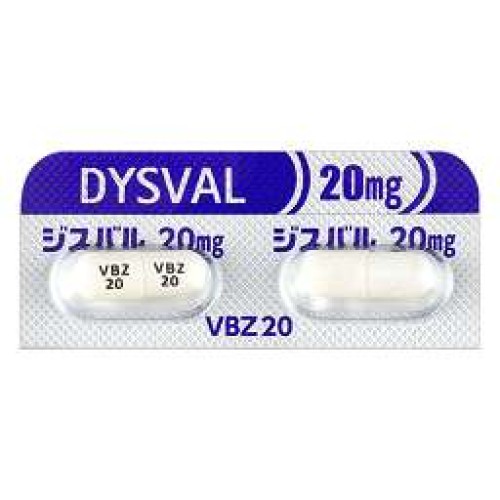
DYSVAL Capsules 20 mg for tardive dyskinesia (valbenazine, VMAT2 inhibitor)
Product Code :
Availability : 4
USD 3,490.00
Are DYSVAL Capsules 20 mg effective for tardive dyskinesia (VMAT2 inhibitor)?
What are DYSVAL Capsules 20 mg?
DYSVAL Capsules 20 mg are a prescription medicine for adults diagnosed with tardive dyskinesia. Each white hard capsule holds white granules containing 20 mg of valbenazine, supplied as the tosylate salt. DYSVAL was the first medicine approved in Japan specifically for this condition, in 2022, and the 20 mg capsule joined the lineup in 2025.
What is tardive dyskinesia?
Tardive dyskinesia is a movement disorder that develops after long-term use of antipsychotic medicines, which are taken for an underlying psychiatric illness. The involuntary movements typically affect:
- the mouth and face, including tongue, lips and jaw
- the arms and legs
- the trunk
In severe cases the movements can interfere with swallowing and breathing. The exact mechanism is not fully understood. One leading explanation is that dopamine receptors in the striatum, a movement-control area of the brain, become oversensitive.
How does valbenazine work?
Nerve cells store dopamine and other monoamines in small vesicles before releasing them. A transporter protein called VMAT2 loads these messengers into the vesicles. Valbenazine and its active metabolite, [+]-α-dihydrotetrabenazine, selectively block VMAT2 on the sending side of the synapse. Less dopamine is stored and released, and the dopamine signaling behind the involuntary movements settles toward normal.
Valbenazine is partly a prodrug. The body splits off its valine group to produce the active metabolite, which blocks human VMAT2 about 45 times more strongly than valbenazine itself in laboratory tests. The parent compound peaks in the blood within about an hour, and the metabolite follows after roughly 4 to 6 hours. With daily dosing, blood levels of both reach a steady state within about 8 days.
What clinical studies show
The main Japanese evidence comes from the J-KINECT trial, reported in Horiguchi et al., “Efficacy and safety of valbenazine in Japanese patients with tardive dyskinesia: A multicenter, randomized, double-blind, placebo-controlled study (J-KINECT),” Psychiatry and Clinical Neurosciences, 2022. The study enrolled 256 adults at 100 sites in Japan. They received 40 mg, 80 mg or placebo once daily for 6 weeks. Involuntary movements were scored on the Abnormal Involuntary Movement Scale (AIMS), where a lower score means fewer movements. The average change from baseline was −2.3 with 40 mg, −3.7 with 80 mg and −0.1 with placebo, and both doses differed significantly from placebo. Patients who switched from placebo to valbenazine improved to a similar degree. The effect was maintained through week 48: by then, scores had fallen by about 3.7 points on 40 mg and 5.7 points on 80 mg from baseline.
A later analysis looked at whether the underlying psychiatric illness matters. It was published as Nagano et al., “Efficacy and Safety of Valbenazine in Japanese Patients With Tardive Dyskinesia and Schizophrenia/Schizoaffective Disorder or Bipolar Disorder/Depressive Disorder: Primary Results and Post Hoc Analyses of the J-KINECT Study,” Journal of Clinical Psychopharmacology, 2024. At week 6, AIMS scores fell by 1.8 (40 mg) and 3.3 (80 mg) in patients with schizophrenia or schizoaffective disorder. In patients with bipolar or depressive disorders they fell by 2.4 and 3.5. Both groups improved over placebo, and the authors concluded that efficacy and long-term safety did not vary with the underlying disease.
Package details: 100 capsules
Active components: valbenazine tosylate
Therapeutic effect: Selectively inhibits VMAT2, reduces the release of dopamine and other monoamines, and decreases the involuntary movements of tardive dyskinesia. Improvement in movement scores was seen by week 6 in clinical trials and was maintained for up to 48 weeks.
Dosage and administration: The usual adult dose of valbenazine is 40 mg once daily. The dose may be adjusted according to symptoms, up to a maximum of 80 mg once daily. An increase is considered only after at least one week at 40 mg, when the medicine is well tolerated and the effect is insufficient. The aim is the lowest effective dose. The 20 mg capsule is used where a 20 mg dose is required. This applies to patients known to lack CYP2D6 enzyme activity, to patients with moderate or severe liver impairment, and to those taking a strong CYP2D6 inhibitor (such as paroxetine or quinidine) or a strong CYP3A inhibitor (such as itraconazole or clarithromycin). In these patients treatment starts at 20 mg once daily, and any increase does not go beyond 40 mg. When a patient needs both a CYP2D6 inhibitor and a CYP3A inhibitor of moderate strength or above, or lacks CYP2D6 activity and takes a moderate or stronger CYP3A inhibitor, combination is avoided where possible. If unavoidable, 20 mg is used without increasing. Your doctor decides how many capsules make up each dose. Blood levels are higher on an empty stomach than after a meal, so keep the same meal conditions before and after a dose change. Your doctor may decide whether the antipsychotic that caused the movements can be reduced or stopped. Do not change that medicine on your own, because the underlying illness may worsen. The dosage can be adjusted by your doctor.
Contraindications and precautions: Do not use if you have had a hypersensitivity reaction to any ingredient, or if you have congenital long QT syndrome or a history of Torsade de pointes. Serious rash, hives, difficulty breathing and swelling of the face or throat have been reported as hypersensitivity reactions.
Drowsiness and sedation can occur, so do not drive or operate dangerous machinery during treatment. Extrapyramidal symptoms such as excess salivation, tremor, restlessness and parkinsonism may appear. Malaise is also common. Rare cases of neuroleptic malignant syndrome have been reported. It shows as muscle rigidity, high fever, rapid pulse, sweating and difficulty swallowing, and needs immediate medical care.
Depression, anxiety and suicidal thoughts have been reported. Patients and families should watch for mood changes, especially early in treatment and after dose changes, and contact the doctor promptly. Use with particular care in patients with a history of suicidal thoughts or attempts. The medicine may raise the active metabolite level enough to prolong the QT interval. An ECG is checked before and during treatment in patients lacking CYP2D6 activity, with a slow heart rate, heart failure or low potassium or magnesium, with moderate or severe liver impairment, or taking QT-prolonging drugs or the inhibitors listed above. Use with caution in dehydration and poor nutrition, where neuroleptic malignant syndrome is more likely.
Tell your doctor and pharmacist about all medicines you take. MAO inhibitors (selegiline, rasagiline, safinamide) may weaken the effect. Tetrabenazine is not recommended together with DYSVAL. Rifampicin, carbamazepine and phenytoin lower blood levels. Valbenazine raises levels of digoxin, aliskiren and dabigatran. Use in pregnancy only if the benefit outweighs the risk. The medicine passes into breast milk in animals, so continuing breastfeeding is decided with your doctor. It has not been tested in children.


