info@trade-jp.net


 menu

News / Blog
ATTENTION! September Holidays!
Catalog


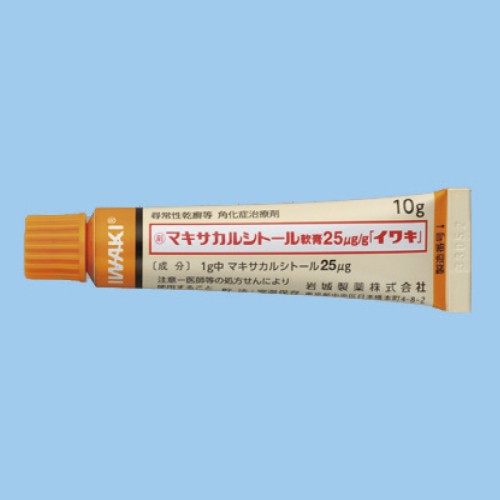
Maxacalcitol Ointment 25 mcg for psoriasis, hyperkeratosis and pustulosis (topical vitamin D3)
Product Code :
Availability : 18
USD 89.00
Is Maxacalcitol Ointment 25 mcg/g effective for psoriasis, hyperkeratosis and pustulosis (topical vitamin D3)?
What is Maxacalcitol ointment?
Maxacalcitol ointment is a prescription medicine for skin disorders in which the outer skin layer forms too quickly or becomes abnormally thick. Each gram contains 25 mcg of maxacalcitol, a synthetic analogue of the active form of vitamin D3 (1α,25-dihydroxy-22-oxavitamin D3). As a topical vitamin D3 preparation, it acts at the site of application and is not a dietary supplement. The first maxacalcitol product was launched in Japan in 2001.
How does it work?
The target is the keratinocyte, the main cell type of the epidermis. In psoriasis and related conditions, these cells divide too fast and mature incompletely, which produces thick, scaly plaques. Maxacalcitol binds to the vitamin D receptor inside the cell. This slows proliferation and promotes normal differentiation, so the epidermis gradually returns to a more regular renewal cycle.
Laboratory data show how strong the receptor effect is. In a keratinocyte-derived cell line (HaCaT), maxacalcitol activated vitamin D response elements at an EC50 of about 38 nM, against about 322 nM for natural calcitriol, roughly eight times less. The molecule was also designed to influence calcium metabolism less than natural vitamin D. Some absorption through the skin still occurs, and this is the reason for the daily dose limit described below.
Approved indications
Maxacalcitol ointment is approved for four groups of conditions:
- Psoriasis vulgaris: raised, red plaques with silvery scale
- Ichthyosis group: dry, thickened, scaly skin
- Palmoplantar keratosis: thickening of the palms and soles
- Palmoplantar pustulosis: recurring sterile pustules on the palms and soles
For psoriasis treatment, the ointment is applied to plaques to reduce thickness, scaling and redness. For hyperkeratosis treatment, it targets the thickened horny layer in ichthyosis and palmoplantar keratosis. In pustulosis, it is used on the affected areas of the palms and soles.
What the data show
According to the prescribing information, an effect is usually seen by the sixth week of use, and progress is typically assessed at that point.
A combined-use study gives one practical example. In 2005 the Nishinihon Journal of Dermatology published “A comparative study of methods for concurrent use of maxacalcitol and clobetasol propionate for the treatment of psoriasis.” It enrolled 36 patients with psoriasis vulgaris, divided into three groups using different schedules: alternating weekdays and weekends, morning and evening, or a premixed 1:1 ointment. Moderate or better improvement was recorded at 2 and 4 weeks, and the authors concluded that combined use with a steroid ointment is a useful option. Where a doctor combines maxacalcitol with another ointment, the schedule is set individually and should be followed as prescribed.
Application and daily limit
The usual dose is an appropriate amount applied to the affected area twice a day, and the frequency may be reduced depending on symptoms. The daily limit is 10 g of ointment, which equals 250 mcg of maxacalcitol and one full tube. The dosage can be adjusted by your doctor.
- Apply to the affected skin only and rub in gently.
- Wash hands after application, unless the hands are the treated area.
- Avoid contact with the eyes and mucous membranes.
- Count all treated areas together when measuring the daily amount.
Package details: 10 g tube * 10
Active components: maxacalcitol (25 mcg per gram)
Therapeutic effect: Slows excessive keratinocyte proliferation and promotes normal differentiation, which reduces plaque thickness, scaling and redness. Used in psoriasis vulgaris, ichthyosis, palmoplantar keratosis and palmoplantar pustulosis. An effect is usually seen within about six weeks.
Dosage and administration: An appropriate amount applied to the affected area twice daily; frequency may be reduced depending on symptoms. Maximum 10 g of ointment (250 mcg of maxacalcitol) per day. The dosage can be adjusted by your doctor.
Contraindications and precautions: Do not use in patients with a history of hypersensitivity to any component. Use with caution in patients with hypercalcemia or a risk of it, and in patients with reduced kidney function. Blood calcium and kidney function may need to be checked during prolonged use or on large treated areas. Avoid the eyes and mucous membranes. Swallowing the ointment is a separate risk. Store the tubes away from children and pets, and keep animals from licking treated skin. Tell your doctor or pharmacist about other medicines you use and about pregnancy or breastfeeding.