
 info@trade-jp.net


 menu

News / Blog
ATTENTION! September Holidays!
Catalog


| Product Code | |
| Availability | 14 |
| Price | USD 259.00 |
| Qty |
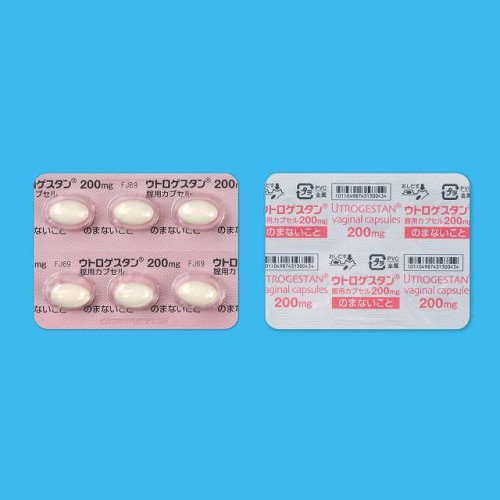
Utrogestan Vaginal Capsules 200 mg for luteal phase support in assisted reproduction (vaginal progesterone, Utrogest)
Product Code :
Availability : 14
USD 259.00
Are Utrogestan Vaginal Capsules 200 mg effective for luteal phase support in assisted reproduction (vaginal progesterone, Utrogest)?
What are Utrogestan vaginal capsules 200 mg?
Utrogestan vaginal capsules 200 mg are a prescription medicine for women undergoing assisted reproductive treatment. Each pale yellow, oval soft capsule contains 200 mg of natural progesterone in an oily suspension. The capsule is placed in the vagina and is not swallowed. The medicine has been available in Japan since 2016 and is approved for luteal phase support in assisted reproduction.
What is luteal phase support?
After ovulation, the empty follicle becomes the corpus luteum, a temporary gland that produces progesterone. This hormone prepares the uterine lining for an embryo and, if pregnancy occurs, helps sustain it until the placenta takes over. In assisted reproduction, ovarian stimulation, egg retrieval and frozen embryo transfer cycles can leave the body’s own progesterone production too low to support implantation. Supplementing progesterone from outside during this period is called luteal phase support.
How does progesterone work?
Progesterone converts the uterine lining, which has been built up by estrogen, into the secretory phase in which an embryo can implant. Once an embryo has implanted, progesterone helps form the decidua, the specialized lining of early pregnancy, and it helps maintain the pregnancy until delivery. Vaginal progesterone treatment replaces this natural hormone. The active ingredient is chemically identical to the body’s own progesterone, which is why it is described as a natural-type progestogen.
In Japanese healthy women who used 200 mg three times a day for 5 days, the average blood progesterone level at the lowest point between doses (days 2 to 5) was 8.43 ng/mL, and the peak on day 5 averaged 12.56 ng/mL. The hormone is bound largely to blood proteins (about 97%) and is broken down in the liver.
What clinical studies show
A Japanese phase III trial treated infertile women who underwent fresh or frozen embryo transfer. Among 144 embryo transfers, the clinical pregnancy rate was 40.97% (59 of 144). The rate of pregnancies continuing to 10 weeks after embryo transfer was 29.86% (43 of 144), and the miscarriage rate was 11.11% (16 of 144).
An overseas phase III trial compared the capsules with progesterone gel. It was reported in Kleinstein, “Efficacy and tolerability of vaginal progesterone capsules (Utrogest 200) compared with progesterone gel (Crinone 8%) for luteal phase support during assisted reproduction,” Fertility and Sterility, 2005. Women who had fresh embryo transfers received either the capsules or the gel until week 12 of pregnancy. At 12 weeks, the pregnancy continuation rate was 25.2% (55 of 218) with the capsules and 22.2% (47 of 212) with the gel. The capsules were therefore shown to be non-inferior to progesterone gel.
Package details: 24 capsules (6 capsules * 4 PTP)
Active components: progesterone 200 mg per capsule
Therapeutic effect: Converts the uterine lining to the secretory phase, prepares it for implantation and helps maintain early pregnancy. It is used as luteal phase support in assisted reproduction.
Dosage and administration: The usual dose is 200 mg (one capsule) three times a day, placed in the vagina, starting 2 to 7 days before embryo transfer. When pregnancy is confirmed, treatment continues until 9 weeks after embryo transfer (week 11 of pregnancy). Remove the capsule from the PTP sheet and insert it into the vagina only, never by mouth. Other vaginal products, such as antifungal preparations, may change how the progesterone is released and absorbed, so tell your doctor if you use any. Stopping suddenly can cause anxiety, mood changes and a greater tendency to seizures, so follow your doctor’s instructions when treatment ends. The dosage can be adjusted by your doctor.
Contraindications and precautions: Do not use if you have any of the following:
- a history of hypersensitivity to an ingredient (the capsules contain sunflower oil and soy lecithin)
- vaginal bleeding of unknown cause
- a missed miscarriage or an ectopic pregnancy
- severe liver impairment
- a history of, or suspected, breast or genital cancer
- arterial or venous thromboembolism or severe thrombophlebitis, now or in the past
- porphyria
Blood clots (heart attack, stroke, deep vein thrombosis, pulmonary embolism, thrombophlebitis and retinal thrombosis) have been reported, frequency unknown. Seek care immediately for chest pain, breathlessness, swelling or pain in a leg, sudden vision changes or weakness on one side of the body.
Tell your doctor if you have epilepsy, depression, migraine, asthma, heart or kidney impairment, diabetes, or mild to moderate liver impairment. Breastfeeding is considered with your doctor, since progesterone can pass into breast milk. After opening the outer box, store the capsules protected from light.


