
 info@trade-jp.net


 menu

News / Blog
ATTENTION! September Holidays!
Catalog


| Product Code | |
| Availability | 16 |
| Price | USD 39.00 |
| Qty |
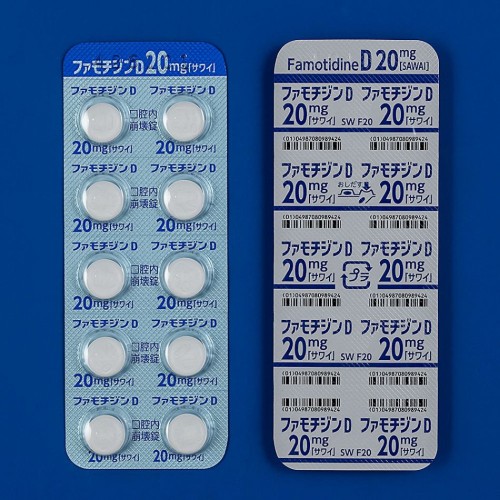
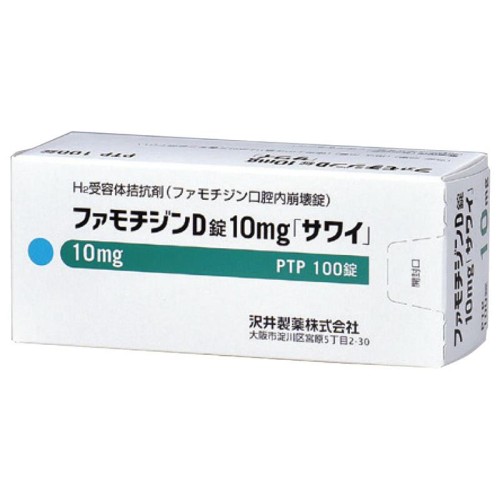
Famotidine D Tablets 20 mg for gastric ulcer, duodenal ulcer, reflux esophagitis and gastritis (H2 receptor antagonist)
Product Code :
Availability : 16
USD 39.00
Are Famotidine D Tablets 20 mg effective for gastric ulcer, duodenal ulcer, reflux esophagitis and gastritis (H2 receptor antagonist)?
What are Famotidine D Tablets 20 mg?
Famotidine D Tablets 20 mg are orally disintegrating tablets that contain 20 mg of famotidine. A white tablet of 8.5 mm is placed on the tongue, where it dissolves with saliva, so it can be taken without water. It can also be swallowed with water. The medicine has been available in Japan since 2006, and it was shown to be bioequivalent to the original orally disintegrating brand, Gaster D. Famotidine D Tablets are approved for these conditions:
- gastric ulcer, duodenal ulcer and ulcer at a surgical joining site (anastomotic ulcer)
- upper gastrointestinal bleeding caused by peptic ulcer, acute stress ulcer or hemorrhagic gastritis
- reflux esophagitis
- Zollinger-Ellison syndrome, a condition in which the stomach produces too much acid
- stomach lining damage (erosion, bleeding, redness and swelling) in acute gastritis and acute flare-ups of chronic gastritis
How does famotidine work?
Famotidine is an H2 receptor antagonist. The parietal cells of the stomach lining have histamine H2 receptors, and when histamine binds to them, the cells release acid. Famotidine blocks these receptors, so the stomach produces less acid and less pepsin, the enzyme that digests protein. With less acid, ulcers and inflamed lining can heal. Gastric ulcer treatment and reflux esophagitis treatment both rely on this reduction of acid.
In people, a 20 mg oral dose reduced two-hour acid secretion by 71.6% to 99.6% and pepsin secretion by 29.5% to 96.9%, depending on the stimulus. At night, between 11 pm and 6 am, acid fell by 91.8% and pepsin by 71.8%. After a dose taken at 8 pm, acid suppression lasted more than 12 hours, and the stomach’s pH stayed between 4.2 and 6.0 until 12 hours later. The blood level needed to halve acid secretion is about 13 ng/mL. Famotidine did not change stomach emptying or the mucus content of gastric juice, and the level of the hormone gastrin did not change during 1 to 2 months of treatment.
The orally disintegrating form behaves like the usual tablet in the body. In the manufacturer’s studies of healthy men, a 20 mg tablet taken without water gave a peak level of about 71 ng/mL after roughly 3.4 hours, and the half-life was about 3 hours. Taking it with water gave similar results.
What clinical studies show
A full evaluation was published in Campoli-Richards and Clissold, “Famotidine: Pharmacodynamic and Pharmacokinetic Properties and a Preliminary Review of its Therapeutic Use in Peptic Ulcer Disease and Zollinger-Ellison Syndrome,” Drugs, 1986. It found that 71% to 92% of duodenal ulcers healed after 4 to 6 weeks of famotidine. For gastric ulcers, 20 mg twice daily healed 83% to 88% within 8 weeks, and in placebo-controlled studies 40 mg at bedtime healed 91% to 97%, against 61% to 66% with placebo. In Japanese patients with duodenal ulcers, 20 mg twice daily healed 69% at 6 weeks, compared with 39% on gefarnate. In two one-year studies of healed duodenal ulcers, 20 mg at bedtime kept relapse rates at 35.7% and 23.4%, against 75.5% and 61% on placebo.
A randomized, double-blind trial was reported in Simon et al., “Famotidine versus ranitidine for the short-term treatment of duodenal ulcer,” Digestion, 1985. It enrolled 183 patients with endoscopically proven duodenal ulcers. After 4 weeks, ulcers had healed in 90.5% with famotidine 40 mg once at night, 83.3% with 20 mg twice daily and 90.2% with 40 mg twice daily, against 93.0% with ranitidine. By 8 weeks, healing rates were 97.6%, 95.2% and 100%, against 93.0%. All treatments were well tolerated.
Package details: 100 tablets
Active components: famotidine 20 mg per tablet
Therapeutic effect: Blocks histamine H2 receptors on the parietal cells of the stomach, reduces the secretion of acid and pepsin, and promotes healing of gastric ulcer, duodenal ulcer, reflux esophagitis and gastritis.
Dosage and administration: For gastric ulcer, duodenal ulcer, anastomotic ulcer, upper gastrointestinal bleeding, reflux esophagitis and Zollinger-Ellison syndrome, the usual adult dose is 20 mg (one tablet) twice a day, after breakfast and after dinner or at bedtime. A single 40 mg dose (two tablets) at bedtime is also possible. For gastric mucosal lesions in acute gastritis and acute flare-ups of chronic gastritis, the usual dose is 10 mg twice a day, or 20 mg (one tablet) once at bedtime. Where the starting treatment for upper gastrointestinal bleeding is an injection, the oral tablets follow once swallowing is possible. The dose may be adjusted according to age and symptoms. For patients with reduced kidney function the dose is lowered. The dosage can be adjusted by your doctor.
Place the tablet on the tongue and let it dissolve with saliva. Do not take it without water while lying down. After opening, protect the tablets from moisture.
Contraindications and precautions: Do not use if you have had a hypersensitivity reaction to any ingredient. Tell your doctor if you have heart disease, a history of drug allergy, kidney impairment or liver impairment. Cardiovascular side effects may occur in heart disease, blood levels remain high in kidney impairment, and liver symptoms may worsen. Blood counts, liver function and kidney function are checked periodically. Famotidine lowers stomach acid, which reduces absorption of itraconazole and other azole antifungals, so tell your doctor if you take them. Use in pregnancy only when the benefit outweighs the risk. Famotidine passes into breast milk, so breastfeeding is considered together with your doctor. No clinical trials have been done in children. In elderly patients, the dose is reduced or the interval extended.


