
 info@trade-jp.net


 menu

News / Blog
ATTENTION! September Holidays!
Catalog


| Product Code | |
| Availability | 17 |
| Price | USD 29.00 |
| Qty |
Bifuroxin Combination Tablets for eczema, dermatitis, cheilitis and stomatitis (vitamin B2 and B6)
Product Code :
Availability : 17
USD 29.00
Are Bifuroxin Combination Tablets effective for eczema, dermatitis, cheilitis and stomatitis (vitamin B2 and B6)?
What are Bifuroxin combination tablets?
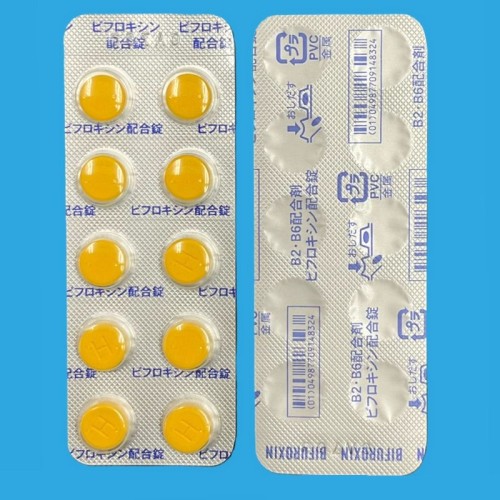
Bifuroxin combination tablets are an oral vitamin preparation that combines two B vitamins. Each yellow, round, plain tablet (9 mm, imprinted H) contains 5 mg of riboflavin (vitamin B2) and 10 mg of pyridoxine hydrochloride (vitamin B6). The preparation has been on the Japanese market since 1963. It is approved for the eczema and dermatitis group of skin conditions, and for cheilitis, angular cheilitis and stomatitis.
How do riboflavin and pyridoxine work together?
Both vitamins act as parts of enzymes. In the body, pyridoxine is converted into pyridoxal phosphate, a coenzyme used in the metabolism of proteins, fats and amino acids, including tryptophan. Riboflavin is converted in the liver into FMN and FAD, the active forms that flavin enzymes need for oxidation and reduction reactions.
The two vitamins depend on each other. The enzyme that activates pyridoxine, pyridoxine phosphate oxidase, is itself a flavin enzyme. When riboflavin is in short supply, vitamin B6 cannot be activated efficiently, even if enough of it is taken in. Giving both vitamins together addresses this link.
Skin and the lining of the mouth renew themselves quickly and rely on a steady metabolic supply. When these vitamins run short, changes often appear there first. Typical signs are:
- cracks and redness at the corners of the mouth and on the lips
- sore, inflamed mucous membrane inside the mouth
- scaly, red patches in the folds beside the nose and around the ears and eyelids
What the research shows
The role of vitamin B2 in activating vitamin B6 in people is documented in Lakshmi and Bamji, “Tissue pyridoxal phosphate concentration and pyridoxaminephosphate oxidase activity in riboflavin deficiency in rats and man,” British Journal of Nutrition, 1974. In riboflavin-deficient rats, liver pyridoxaminephosphate oxidase activity fell to only 15% of that in controls. In human subjects with lesions of the mouth, treatment with either riboflavin or pyridoxine led to improvement. Blood pyridoxal phosphate was markedly raised by pyridoxine but not by riboflavin alone. This finding supports combining the two vitamins.
A field study in children examined how often these vitamins are lacking and what supplementation does. It was reported by Bamji et al., “Relationship between biochemical and clinical indices of B-vitamin deficiency. A study in rural school boys,” British Journal of Nutrition, 1979. Almost all of the boys studied near Hyderabad were deficient in riboflavin, and 61% were deficient in pyridoxine. Angular stomatitis was present in 41.3% and glossitis in 18.2%. Biochemical deficiency of both vitamins was somewhat more common in boys with angular stomatitis. One month of daily B-complex containing 4 mg of riboflavin and 10 mg of pyridoxine significantly reduced the prevalence of glossitis. The authors noted that angular stomatitis has a more complex cause, possibly including infection. This is why the medicine is intended for cases in which a vitamin deficiency or a metabolic disorder is considered to play a part.
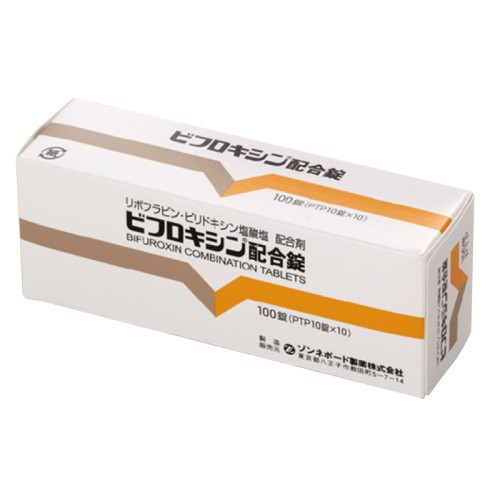
Package details: 100 tablets
Active components: riboflavin 5 mg and pyridoxine hydrochloride 10 mg per tablet
Therapeutic effect: Supplies vitamin B2 and vitamin B6, which are needed for the metabolism of proteins, amino acids and fats, and helps correct a deficiency or metabolic disturbance that is thought to contribute to eczema and dermatitis, cheilitis, angular cheilitis and stomatitis.
Dosage and administration: The usual adult dose is 3 to 6 tablets a day, taken by mouth in 1 to 3 divided doses. The dose may be adjusted according to age and symptoms. The dosage can be adjusted by your doctor. Your doctor reviews your progress at follow-up visits and decides how long treatment should continue. The label asks that use not be continued for months without a visible response.
Contraindications and precautions: Use in pregnancy only when the benefit outweighs the risk. For breastfeeding, the benefit of treatment and of breast milk are weighed together. No clinical trials have been done in children. In elderly patients, a lower dose may be chosen because physiological function is generally reduced.
Vitamin B6 can weaken the effect of levodopa, so tell your doctor if you take it. Riboflavin turns urine yellow, which is harmless but can affect some laboratory tests, so mention the medicine before any urine or blood test. The tablets contain lactose. After opening the pillow pack, store the tablets protected from light.


