
 info@trade-jp.net


 menu

News / Blog
ATTENTION! September Holidays!
Catalog


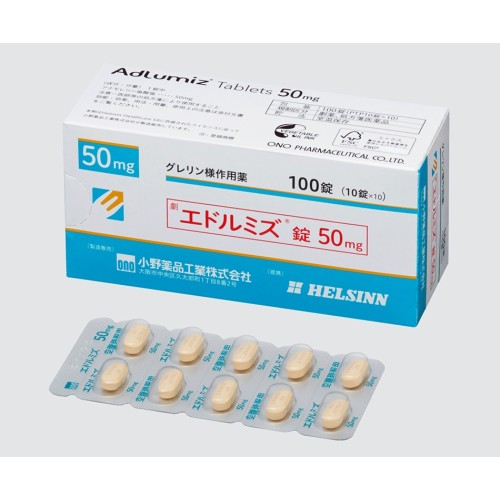
ADLUMIZ Tablets 50 mg effective for cancer cachexia (anamorelin, ghrelin receptor agonist)
Product Code :
Availability : 7
USD 790.00
Are ADLUMIZ Tablets 50 mg effective for cancer cachexia in non-small cell lung, gastric, pancreatic and colorectal cancer (ghrelin receptor agonist)?
What are ADLUMIZ Tablets 50 mg?
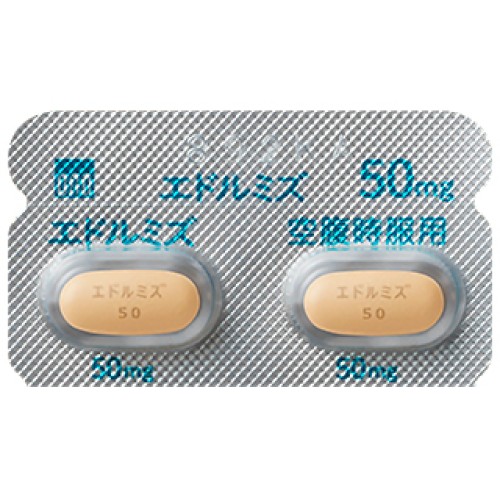
ADLUMIZ Tablets 50 mg are a prescription medicine for adults with cancer cachexia. Each pale yellow, film-coated tablet contains 50 mg of anamorelin hydrochloride. The medicine is approved for cachexia caused by four cancers: non-small cell lung cancer, gastric cancer, pancreatic cancer and colorectal cancer. It is intended for patients whose cancer cannot be removed surgically or has recurred, and whose cachexia has not responded sufficiently to nutritional therapy.
What is cancer cachexia?
Cancer cachexia is a syndrome of continuing weight loss, mainly of lean body mass such as muscle, together with loss of appetite. It goes beyond ordinary poor eating, and added calories alone often cannot reverse it. In Japan, the criteria for starting this medicine are:
- weight loss of 5% or more within 6 months, together with poor appetite
- at least two of the following: fatigue or malaise, generalized muscle weakness, and abnormal blood values (CRP above 0.5 mg/dL, hemoglobin below 12 g/dL or albumin below 3.2 g/dL)
How does anamorelin work?
Ghrelin is a hormone released mainly by the stomach. It signals the brain to eat and stimulates the pituitary gland to release growth hormone. Anamorelin imitates this action. It binds to the ghrelin receptor, GHS-R1a, and activates it, which promotes growth hormone secretion and increases appetite. The result is weight gain.
The mechanism has been shown in the laboratory. In rat pituitary cells, anamorelin stimulated growth hormone release. A single oral dose raised plasma growth hormone in rats, and repeated doses increased food intake and body weight. In people, blood levels peak within about 1 to 2 hours after a dose, the half-life is about 9 hours, and a steady state is reached within a week of daily use.
What clinical studies show
Two Japanese trials assessed anamorelin 100 mg once daily for 12 weeks. The first was reported in Katakami et al., “Anamorelin (ONO-7643) for the treatment of patients with non-small cell lung cancer and cachexia: Results from a randomized, double-blind, placebo-controlled, multicenter study of Japanese patients (ONO-7643-04),” Cancer, 2018. It enrolled 173 patients with advanced non-small cell lung cancer, 83 on anamorelin and 90 on placebo. Lean body mass, measured by DXA scan, rose by an average of 1.38 kg with anamorelin and fell by 0.17 kg with placebo. The difference of 1.56 kg (95% confidence interval 1.11 to 2.00 kg) was statistically significant (p<0.0001). The authors also reported improved appetite symptoms and nutritional state. Motor function did not differ between the groups.
The second was reported in Hamauchi et al., “A multicenter, open-label, single-arm study of anamorelin (ONO-7643) in advanced gastrointestinal cancer patients with cancer cachexia,” Cancer, 2019. It followed 49 patients with colorectal, gastric or pancreatic cancer. Lean body mass never fell below its starting value in 63.3% of them (31 of 49), and the authors reported improved appetite and rapid increases in lean body mass and body weight.
Package details: 100 tablets
Active components: anamorelin hydrochloride 50 mg per tablet
Therapeutic effect: Activates the ghrelin receptor GHS-R1a, promotes growth hormone secretion and appetite, and increases body weight and lean body mass in cancer cachexia associated with non-small cell lung, gastric, pancreatic and colorectal cancer.
Dosage and administration: The usual adult dose is 100 mg (two 50 mg tablets) once daily, taken on an empty stomach. Do not eat for 1 hour after taking it. Food strongly reduces absorption: taken 2 hours after a meal, blood levels fell to about a third of the fasting level for peak concentration and about half for total exposure. If neither weight gain nor appetite improvement is seen, treatment is in principle stopped at around 3 weeks. There is no experience beyond 12 weeks of use, so your doctor reviews at regular visits, checking weight and appetite, whether to continue. The dosage can be adjusted by your doctor.
Contraindications and precautions: Do not use if you have a history of hypersensitivity to any ingredient, congestive heart failure, myocardial infarction or angina, a severe conduction disorder such as complete atrioventricular block, or moderate to severe liver impairment (Child-Pugh B or C). Do not use if you cannot eat by mouth because of intestinal obstruction or another structural abnormality of the digestive tract. Do not combine with clarithromycin, itraconazole, voriconazole, posaconazole, products containing ritonavir or cobicistat, ensitrelvir fumarate, ceritinib, lonafarnib or tucatinib ethanolate, because these raise the blood level sharply.
The heart’s conduction system may become suppressed , so an ECG, pulse, blood pressure, chest X-ray and electrolytes are checked before and regularly during treatment, with particular care in the early weeks. Tell your doctor if you have valve disease, cardiomyopathy, a history of QT prolongation, low potassium, magnesium or calcium, or previous anthracycline chemotherapy. Blood sugar can rise, and diabetic ketoacidosis may have occurred. Blood glucose and urine sugar are measured before and during treatment. Liver tests are also should be done regularly. In patients with mild liver impairment, take particular care if a moderate CYP3A4 inhibitor is added.
Antiarrhythmics such as pilsicainide, beta-blockers such as atenolol, QT-prolonging drugs such as imipramine and cardiotoxic anticancer drugs may add to the heart effects. Erythromycin, diltiazem, imatinib and grapefruit juice raise anamorelin levels. Carbamazepine, rifampicin, phenytoin and St. John’s wort lower them and may weaken the effect. Use in pregnancy only if the benefit outweighs the risk. For breastfeeding, the benefit of treatment and of breast milk are weighed together. No clinical trials have been done in children. In elderly patients, treatment proceeds with careful observation.


